A design-build contractor holds design and construction under one contract, which means one firm prices the work, owns the drawings, and answers for the result. That single change reshapes your budget timeline, your change-order exposure, and who you call when a field condition contradicts the plans. Here is what design-build firms actually do, what the delivery research shows, and how to vet one before you sign.
What Is a Design-Build Contractor?
A design-build contractor is a single entity that carries one agreement with the owner covering both design and construction.
Instead of hiring an architect and a builder separately, you work with one design-builder who holds design responsibility, construction responsibility, and a single point of accountability from concept through closeout.
Two structural variants exist:
- Contractor-led design-build. A construction firm leads and brings architects and engineers in-house or through a standing affiliation. This is the common form on remodels, fitups, and mid-size commercial work.
- Architect-led design-build. A design practice leads and carries the construction partner.
Either way, the contract structure is identical: one agreement, one lead entity, one party answerable for the finished building.
Specialist scopes still get subcontracted, including structural engineering, MEP design, curtain wall, and geotechnical work. The design-build contractor remains the primary contact and primary force behind the work , so the coordination burden stays off your desk.
Our general contractor services run on this model across residential and commercial work in New Jersey.
Design-Build vs. Design-Bid-Build
Traditional delivery runs in sequence. Hire an architect, finish the drawings, then bid the completed set to general contractors.
The friction is structural. Design gets produced without live pricing or constructability input, and reconciliation happens after the fact, when the low bid lands over budget and everyone starts cutting.
| Factor | Design-Build | Design-Bid-Build |
|---|---|---|
| Contracts held by owner | One | Two (designer and builder) |
| When pricing gets reliable | During design, refined continuously | After drawings are complete and bid |
| Who owns design errors | The design-builder | The owner, through the design contract |
| Schedule overlap | Design and construction overlap | Strictly sequential |
| Change-order exposure | Lower for design-driven changes | Higher; gaps surface in the field |
| Who the owner calls | One team | Depends who is at fault |
What the Delivery Research Actually Shows
Most contractor blogs quote design-build savings with no source attached. The numbers below come from a named academic study, so you can weigh them yourself.
Research by Keith Molenaar of the University of Colorado Boulder and Bryan Franz of the University of Florida compared 212 projects, 53 design-bid-build, 79 construction-manager-at-risk, and 80 design-build, 62% publicly funded and completed between 2008 and 2013 . Two findings matter for owners:
- Cost:
design-build projects averaged 1.9% less per square foot than CM-at-Risk and 0.3% less than design-bid-build, with 2.4% less cost growth than CMR and 3.8% less cost growth than DBB .
- Schedule:
design-build ran 13% faster than CMR during construction and 36% faster than DBB, and from design through completion delivered 61% faster than CMR and 102% faster than DBB .
Read those carefully. The per-square-foot cost gap over traditional delivery is small. The schedule gap is enormous. Design-build is a speed and certainty play far more than a discount, and any firm selling it as a guaranteed price cut is overstating the evidence. You can review the underlying design-build performance research from DBIA directly.
Adoption is still climbing: FMI projects design-build to account for more than 47% of construction spending by 2028 and $2.6 trillion over the 2024 to 2028 forecast period .
CM-at-Risk and Integrated Project Delivery sit on the same spectrum, adding builder input early while keeping design under a separate contract or shared risk. This is not a binary choice.
What a Design-Build Contractor Does at Every Phase
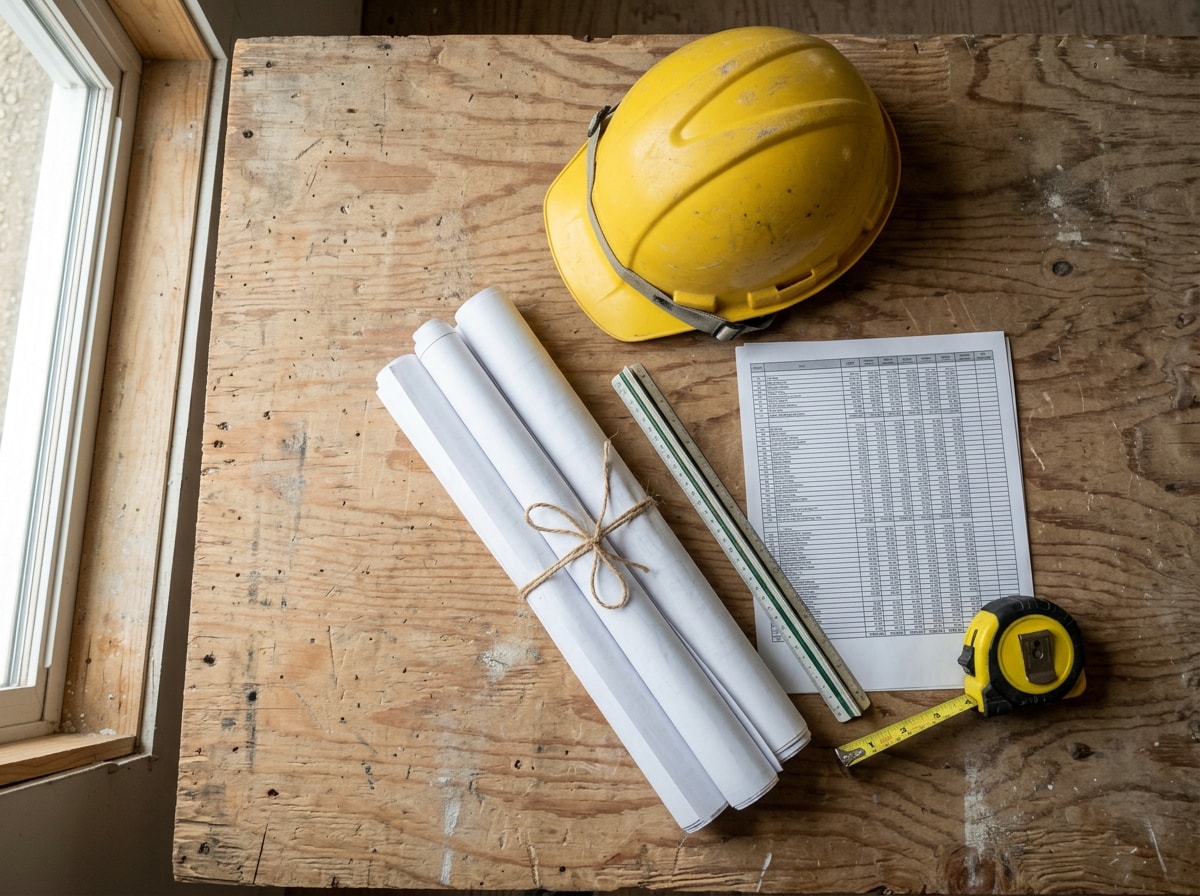
The model earns its reputation in the overlap. Design and construction do not run like relay legs. They interleave, so pricing, permitting, and procurement start while drawings are still developing.
Feasibility and Preconstruction
Before anyone draws a floor plan, the team pressure-tests the idea.
That means a feasibility study covering site constraints, zoning, utilities, and program fit, plus a preliminary budget and a written risk assessment naming the unknowns most likely to move the number later.
You approve that package before design spending accelerates.
Having a builder in the room during preconstruction is what makes an early budget usable. Someone is pricing real crew rates, real material lead times, and real local subcontractor availability instead of applying a square-foot average to a concept sketch.
Team Selection
Owners typically issue an RFQ to shortlist qualified firms, then an RFP asking finalists for a technical approach and price. Proposals get scored on team experience, relevant project history, schedule credibility, and cost.
- Qualifications-based selection ranks firms on capability, then negotiates price.
- Best value selection weighs price and qualifications together on a published formula.
Both exist because low-bid award works poorly when the scope is not fully drawn yet.
Construction, Quality Control, and Closeout
Once crews mobilize, the contractor runs subcontractor coordination, enforces the quality control plan, owns site safety, and holds the schedule.
The structural advantage shows up in problem-solving speed. When a field condition contradicts the drawings, the designer sits on the same team, so the answer comes back in hours instead of cycling through a formal RFI.
Construction administration continues to the end: punch list, closeout documentation, warranties, as-builts, commissioning of building systems, and operator training, all inside the same contract.
Who Is on the Design-Build Team?
You sit outside the delivery team but hold the only contract that matters to you. Your job is to set the vision, define goals and constraints, select the design-builder, and manage one agreement.
Design-build general contractor (lead entity). Behind the title sits a real org chart: a project executive with commercial authority, a project manager running budget, procurement, and submittals, and a superintendent directing daily field operations. Ask which of them you will actually talk to each week.
Architects and engineers. They sit inside the delivery team rather than being contracted independently by you, and they stay engaged through construction instead of stepping back at permit. That produces constant constructability feedback. It also costs you something, which the next section covers.
Subcontractors and subconsultants. Fire protection, elevators, envelope, acoustics, and geotechnical scopes go to trade partners under the prime contract. Performance, insurance, schedule compliance, and warranty obligations flow up to the lead entity instead of fragmenting across your desk.
Benefits of Hiring a Design-Build Contractor
These are consequences of the contract structure, not service promises.
- One counterparty. If the mechanical room does not fit the equipment, nobody has to establish whether the designer drew it wrong or the builder built it wrong before it gets fixed. That happens inside the design-builder's team, on their time.
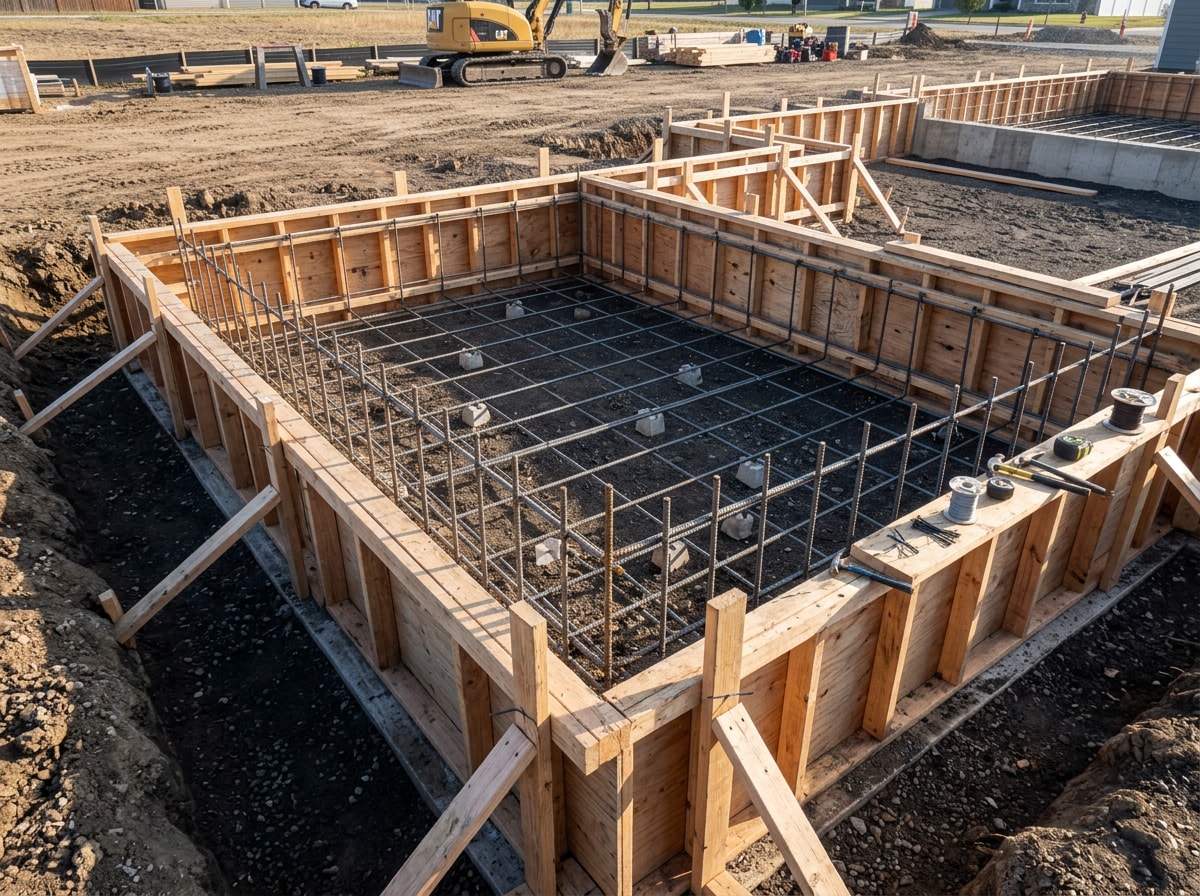
- Overlapping phases. Foundation work starts while interior detailing continues, and you skip the rebid gap between a permit set and a mobilized crew.
- Early long-lead procurement. Switchgear, rooftop units, and structural steel get released during design rather than after bid. On a recent commercial fitup, releasing the HVAC package during design development is the only reason that job hit its occupancy date when equipment lead times stretched.
- Budget feedback while changes are still cheap. Value engineering during design means substitutions on paper, not demolition in the field.
- Fewer design-driven change orders. Errors and omissions caught through daily collaboration get resolved internally, and when they surface late, they sit with the design-builder.
Know which number you are holding. A design-phase budget is a forecast. A fixed price or GMP issued after design development is a commitment. Ask at what design percentage the firm will convert one into the other.
The Drawbacks Nobody Puts in the Brochure
Three honest limits, because owners who learn these mid-project get angry for good reason.
You lose your independent design advocate. The architect now works for the builder. Strong firms address this by supporting owner's-representative involvement and writing performance criteria you control into the contract. Ask for both in writing.
Price discovery is narrower. You are negotiating with one team instead of comparing three hard bids on an identical drawing set. Best value selection with a fee and general-conditions breakdown is the counterweight.
It does nothing about the surprises that actually blow budgets. Design-build shrinks design-driven change orders. It does not touch owner-directed scope changes or unforeseen conditions like contaminated soil, undocumented utilities, or rotted framing behind a wall. Carry a contingency anyway.
Why Self-Performing Trades Matter
Self-performing means the contractor executes a scope with crews on its own payroll instead of subletting it. Concrete, carpentry, demolition, and structural framing are the scopes most often self-performed, because they sit on the critical path.
The advantage is direct control. Your contractor sets crew priorities, redeploys workers between areas the same morning, and inspects its own work under its own QC program.
When a subcontractor's crew disappears to a better-paying job across town, you wait. When it is the contractor's own crew, you do not.
Safety belongs in the calculus too. OSHA's multi-employer citation policy assigns responsibility among exposing, creating, correcting, and controlling employers on shared sites, and fewer employers in the mix usually means a cleaner line of control over conditions.
So ask directly: which trades do you self-perform, with what crew sizes, and how many of those crews are committed elsewhere during my schedule window?
Is Design-Build Right for Your Project?
Run the decision through five questions:
- How hard is your completion deadline?
- How much of the scope interacts with structure or building systems?
- How early do you need a number you can finance against?
- Is design locked or still fluid?
- Do you have the staff and the appetite to coordinate independent professionals yourself?
Good fit: technically complex builds, tight timelines, and early-stage projects still shaping feasibility, phasing, and program. If you are choosing between two sites, you want a builder in that conversation. It also fits whole-home work like home remodeling, basement remodeling, and commercial construction where design and construction decisions are tangled together.
Poor fit: you already hold complete construction drawings, procurement rules require low-bid award, or the scope is cosmetic with almost no design content.
One more that is not a footnote: an owner unfamiliar with design-build is a genuine risk factor. The model asks you to decide faster and trust an integrated team more. If that sounds uncomfortable, traditional delivery may serve you better.
Want a cost and schedule read on your specific scope? Get a free estimate and we will tell you which delivery model your project actually needs.
How to Choose a Design-Build Contractor
Start with the non-negotiable filter: registration, insurance, and bond.
In New Jersey, home improvement work requires registration with the Division of Consumer Affairs, proof of general liability coverage of at least $500,000 per occurrence, and renewal every two years . Ask for the 13VH registration number and verify it yourself through the state's home improvement contractor program. Request certificates of insurance from the carrier, not the contractor.
Then work this list on your next call:
- Recent project history in your building type, with references from jobs finished in the last two or three years
- In-house vs. affiliated design staff: who employs the architects and engineers, and in which states are they licensed?
- Self-perform capability on the trades that drive your critical path
- Preconstruction deliverables at concept, schematic, and design development
- Financial strength and bonding capacity relative to your project value
- Safety record: EMR and recordable incident rate, with the years attached
- Transparent pricing: how fees, contingency, and allowances are disclosed
- Conversion point: will the firm commit to a fixed price or GMP after design, and at what design percentage?
Local market knowledge is not a bonus bullet. A firm that knows your jurisdiction's permit rhythms, holds real subcontractor relationships nearby, and can benchmark against comparable local jobs will beat a better-credentialed stranger most of the time. We work throughout the region, including Short Hills, Bedminster, and Branchburg.
FAQ
What is the difference between a design-build firm and a general contractor?
A design-build firm handles both design and construction under one contract. A general contractor typically builds from drawings someone else produced. The gray area: some GCs offer light design assistance or an in-house drafter, which is not the same as employing licensed architects and engineers.
Will I pay more with a design-build firm than a GC?
Total project cost, design fees plus construction, usually lands in a comparable range. A design-build proposal can read higher because it includes design work you would otherwise buy separately under a second contract. Compare total delivered cost, not headline fees.
How much do design-build firms charge?
Fee structures vary. Common arrangements are a percentage of total project cost, a separate design fee rolled into the construction agreement, or a construction management fee layered on cost of work. Ranges shift by market, project type, and complexity, so compare structures rather than percentages.
What are the disadvantages of design-build?
You lose an independent design advocate, you get less competitive price discovery than hard bidding a finished set, and the model does nothing about unforeseen site conditions or owner-driven scope changes.
Who owns the drawings in a design-build contract?
It depends entirely on what the contract says. Many design-build agreements license the drawings to the owner for that project only. If you want full ownership or reuse rights, negotiate it before signing.
Do I still need an architect if I hire a design-build contractor?
An architect is still involved, but the design-builder contracts them instead of you. Some owners also retain a separate owner's representative or peer reviewer to check the design on their behalf.
Does design-build work for residential remodeling?
Yes, and it is common on whole-home renovations, additions, basements, and exterior work where structure, layout, and finishes all interact. Smaller single-trade jobs like a straightforward window replacement rarely need it.
Is design-build worth it?
Usually yes for complex or schedule-driven projects where you need early cost certainty and do not want to coordinate separate professionals. It is a weaker fit if you already hold complete drawings, face low-bid procurement rules, or have a simple scope. Match the delivery method to the project.
Talk to a Design-Build Team
Bring a site, a budget range, and a deadline, and we will tell you whether design-build or traditional delivery serves the project better before anyone pays for drawings. See how we work at Lion IC Construction or request a free estimate.
Written by the project management team at Lion IC Construction, a New Jersey general contractor delivering residential and commercial projects across Somerset, Morris, Hunterdon, and Essex counties. Questions about your scope can go straight to our team through the contact page.