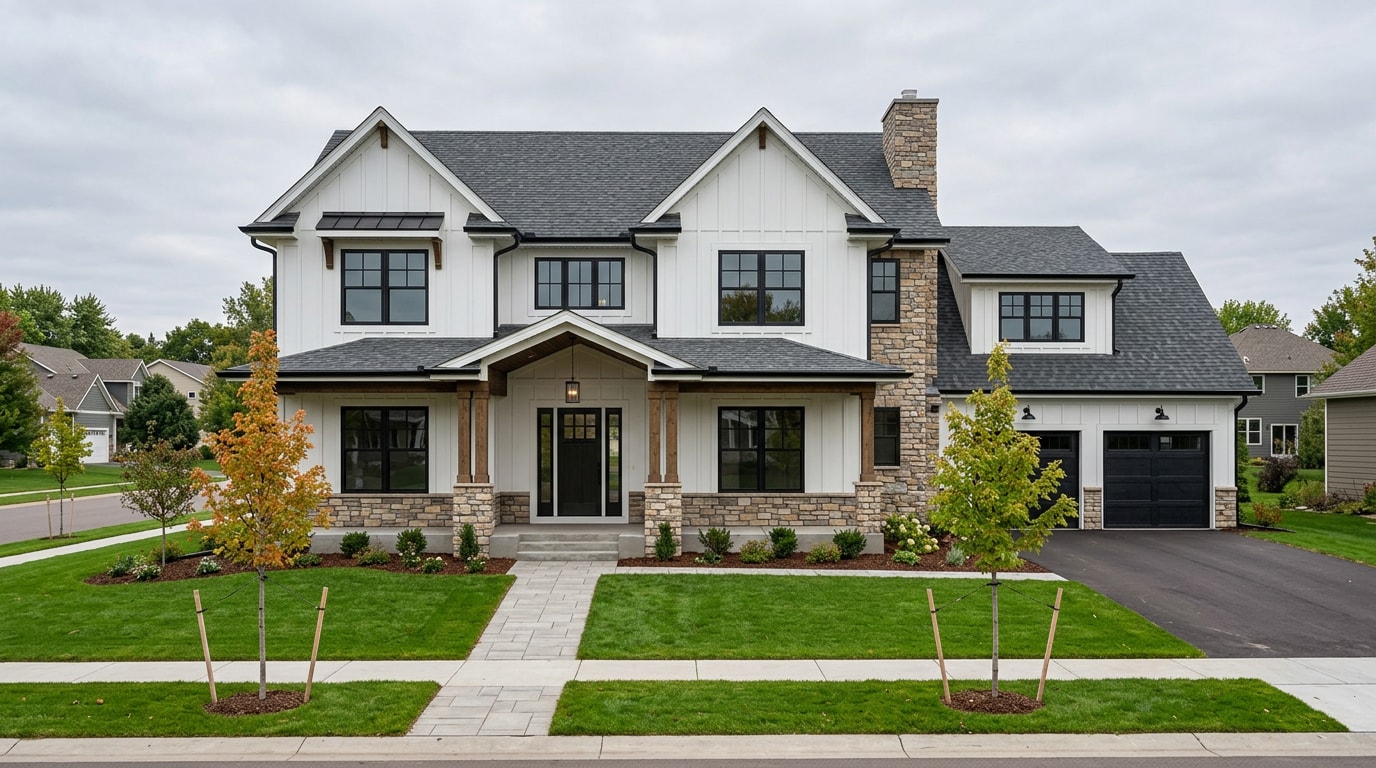

A home addition builder controls your budget, your schedule, and how cleanly new framing meets 40-year-old framing. That makes hiring one closer to choosing a partner than buying a product. Here is how to vet candidates before you sign anything.
Visit Lioni Construction and Maintenance to see our services and request a free estimate.
What a Home Addition Builder Actually Does
An addition is not a big remodel. It is a small new building attached to a house that is already settled, already framed, and already weathered.
A qualified builder owns all of it:
- Foundation and footings sized for local frost depth and soil
- Structural tie-in where new framing meets existing walls and roof
- Roof and siding transitions that shed water instead of trapping it
- Electrical panel capacity, HVAC load, and plumbing extensions
- Grading and drainage so the new foundation does not pond water
- Permits, subcode inspections, and the final certificate
The single hardest detail is the tie-in. On a 1960s ranch we added onto, the existing rafters were undersized by current code and the first-floor top plate was out of level by more than an inch across the back wall, which had to be corrected before a single new stud went up. That is the kind of condition a bathroom remodeler has never had to price.
Contractors who handle this work sit under the general contractor) umbrella, and the framing skill involved is the same discipline used in structural framing) work.
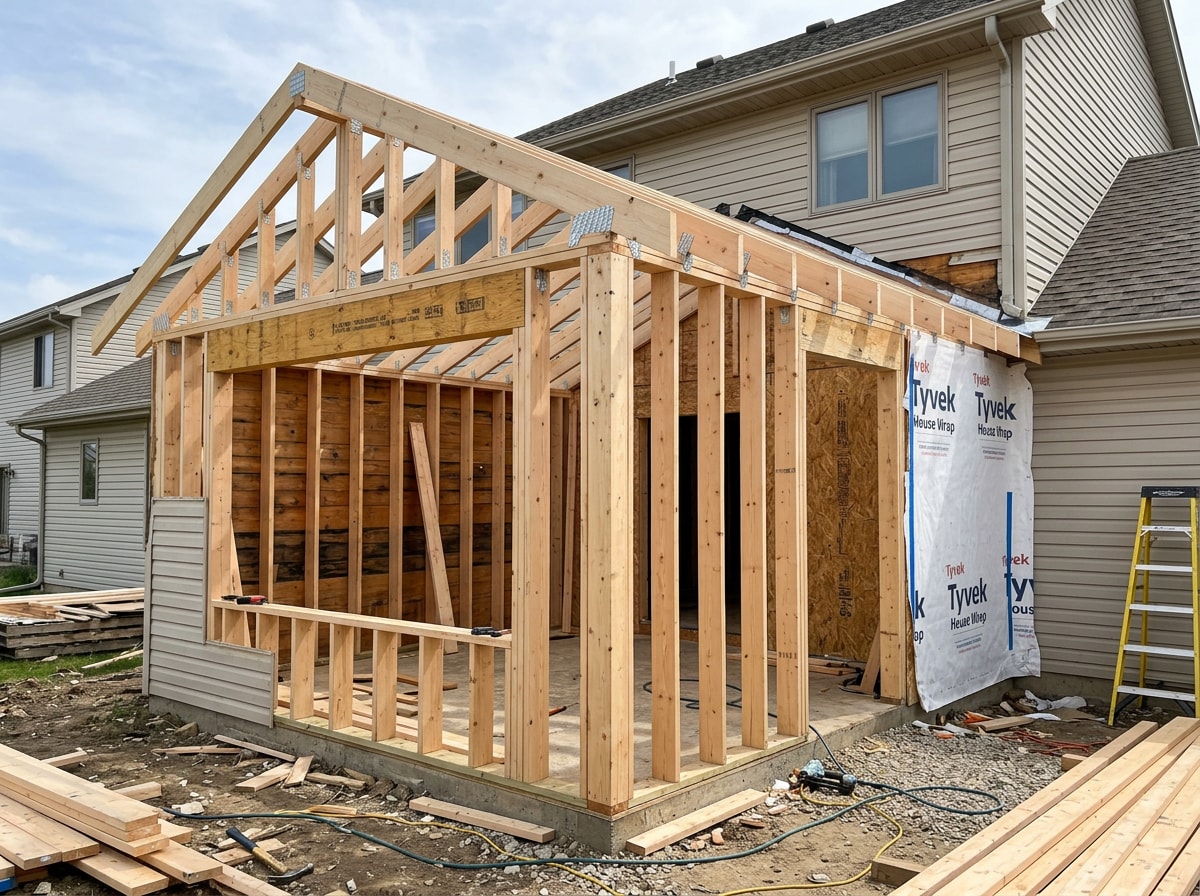
What Additions Cost in 2026, and Why Per-Square-Foot Lies
Use cost ranges as guardrails, not as bids. National cost guides commonly place ground-floor additions somewhere around $150 to $350 per square foot, with second-story work running meaningfully higher because the existing structure has to carry new load.
Demand for this work has stayed durable. Harvard's Joint Center for Housing Studies projects in its Leading Indicator of Remodeling Activity that annual homeowner improvement spending reaches roughly $518 billion by the end of 2026, even as growth cools. Busy builders have backlogs, which is one reason rushed bids should worry you.
| Addition type | Typical cost driver | Where budgets break |
|---|---|---|
| Bump-out (cantilevered) | No new foundation | Roof tie-in and siding match |
| Ground-floor room | New footings and slab or crawlspace | Drainage, HVAC capacity |
| Kitchen or bath addition | Plumbing and ventilation runs | Fixture allowances set too low |
| Second story | Structural reinforcement below | Temporary shoring, weather protection |
| In-law suite or ADU | Separate systems, egress | Zoning approvals before permits |
Two bids at very different per-square-foot numbers can describe the same finished room. The metric hides what each proposal includes, so compare scope lines, not headline rates.
Six Checks to Run on Every Builder
Run these in the same order for every candidate so your comparison stays apples to apples.
1. Confirm Addition-Specific Experience
Ask how many additions they completed in the past year, and in the past five. Then ask how they handle the structural tie-in, grading around the new foundation, panel and HVAC capacity, and matching existing siding and roofing.
A firm whose recent portfolio is mostly cosmetic home remodeling) work is not automatically wrong for the job, but it has to prove the structural side.
2. Verify Registration, Insurance, and Bonding
Get the registration or license number and check it yourself. In New Jersey, home improvement contractors must register with the Division of Consumer Affairs, and you can verify a company through the state's home improvement contractor program.
Two details most homeowners miss:
- A New Jersey registration number begins with 13VH and must appear on contracts, estimates, and advertising.
- Registration is not a license. It confirms the company is registered and insured, not that the work will be good.
Then confirm general liability and workers' compensation in writing, directly from the insurer. Workers' comp needs to cover everyone who will set foot on your property. Ask separately who holds the electrical and plumbing licenses for the job, since those trades are licensed on their own.
3. Read the Portfolio, Then Call References
Look for completed additions similar to yours. Progress photos beat staged finals, because they show structure.
Call two or three past clients and ask:
- Did the project finish on the promised schedule?
- Were there unexpected costs, and how were they explained?
- How were change orders priced and documented?
- Would you hire this builder again?
4. Decide on Design-Build Early
| Factor | Design-build | Architect plus separate GC |
|---|---|---|
| Code compliance | One firm owns it | Split between two parties |
| Contracts | One contract, one point of contact | Two contracts, two relationships |
| Competitive bidding | Limited, priced as a whole | Stronger, plans go to several GCs |
| Timeline | Usually shorter, design and pricing overlap | Often longer, bidding follows design |
Neither model wins automatically. Ask each candidate whether you need to bring your own architect or whether they carry design partners, because stamped plans are commonly required for permits either way.
5. Check Company Stability
Your workmanship warranty is only worth as much as the company behind it.
Look for years operating under the same name and ownership, a physical office, and long-standing relationships with the same subs and suppliers. A truck-only outfit is harder to find two winters later.
6. Test Communication Before You Sign
Ask who your daily point of contact is, how updates get shared, and how a question escalates when the site lead cannot answer it.
You also get free data during the sales process. Did they arrive when they said they would? Is the estimate written and detailed, or a verbal number? Responsiveness before a contract rarely improves after one.
Questions to Ask at the Consultation
Bring a written list so every builder answers the same things:
- How many additions have you built in this town or county?
- Which addition types do you specialize in?
- Do you reuse the same subcontractors, or bid each trade out?
- Who pulls permits and meets the inspectors?
- What is a realistic schedule, and when could you start?
- What usually delays a project like this?
- How do you handle unforeseen conditions once walls are open?
- What is your payment schedule?
- What does your workmanship warranty cover, and for how long?
- What is excluded from this proposal?
Bring your own material too: photos of existing conditions, inspiration images, property survey, and a priority list separating decided items from open questions. Anything that affects scope or price should be put in writing.
How to Compare Proposals
Never compare bids by the bottom line. Confirm each proposal covers the same work, because a cheaper number often means undefined responsibility, not lower cost.
Permits are the clearest test. New Jersey work falls under the Uniform Construction Code administered by the Division of Codes and Standards, and additions typically trigger building plus separate electrical, plumbing, and fire subcode permits. Ask each bidder to state in writing who files them and who meets each inspector.
Then interrogate allowances. A flooring or fixture allowance set artificially low makes a bid look competitive until selection day. Treat outliers in both directions with suspicion.
Payment schedules deserve the same scrutiny. We break down how phase-based draws should be structured in our guide to vetting commercial remodeling contractors), and the logic transfers directly to residential additions.
Red Flags
- Offering to skip permits. Unpermitted work hurts resale and insurability.
- No registration number on the estimate. In New Jersey that is a legal requirement, not a formality.
- Refusing to put things in writing. If it is not documented, it is not enforceable.
- Cash-only payment. Cash removes your paper trail and your protections.
- Demanding full payment upfront. Not standard practice, and several states restrict deposits.
- Pressure to decide today. Real builders have backlogs, not closing scripts.
Contract Essentials
Your agreement should spell out:
- Detailed scope: materials, finishes, fixtures, appliances, labor
- Start date, completion date, and milestone dates
- Payment tied to completed phases, not calendar dates
- A written change-order procedure with pricing rules
- Warranty terms in full
- Cleanup, debris removal, and site protection
New Jersey requires a written contract for home improvement work over $500, and contractors are barred from demanding final payment before the job is complete per the contract terms. Trimming 5 to 10 percent on a large project is normal negotiation. Pushing for 20 to 30 percent comes out of materials or supervision. This is general guidance, not legal advice, and an attorney review is worth considering at this project size.
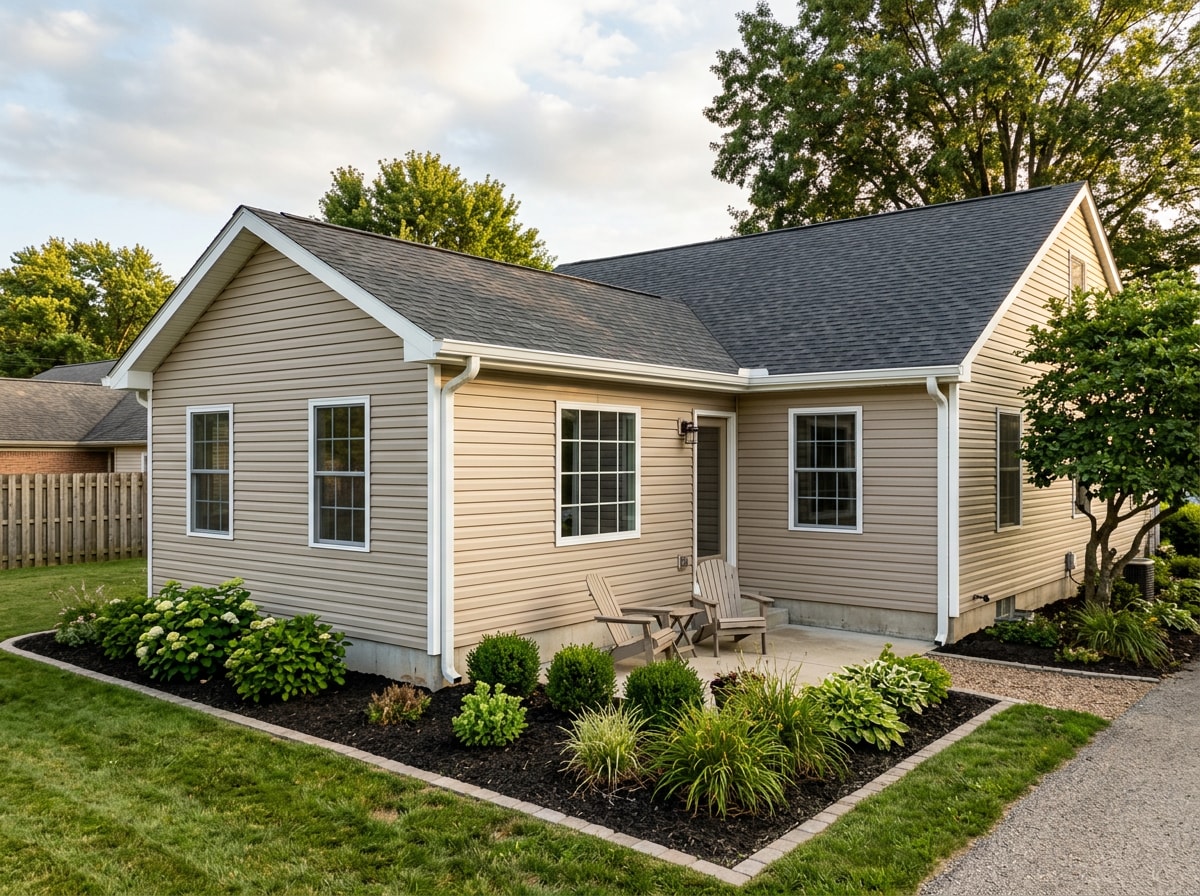
If your addition ties into a basement, factor that scope in early through basement remodeling), and plan envelope work such as siding installation) and window replacement) so the addition reads as original to the house.

Planning an Addition in Central and North Jersey
We build additions across Somerset, Hunterdon, Morris, and Essex counties, including Bridgewater), Chester), Bedminster), Readington), and Short Hills). Permit timelines, zoning setbacks, and flood mapping vary town by town, so local familiarity saves real weeks.
See how we work at Lion Construction), or get a free estimate) with a written scope you can compare line by line.
FAQ
How long does a home addition take?
A single-room addition usually takes 3 to 5 months of construction. A second story typically runs 6 to 12 months. Add 2 to 8 weeks for permits before ground breaks, longer if zoning approval is needed.
Do I need a permit for a home addition?
Yes. Nearly every addition requires a construction permit from your municipality, plus separate subcode permits for electrical, plumbing, and mechanical work. Fees and review times vary by town.
Is it cheaper to build out or build up?
Building out is usually cheaper per square foot because you are not reinforcing existing structure. Building up avoids new foundation work and preserves yard space, but often requires an engineer to verify the existing foundation and walls can carry the load.
How many quotes should I get?
Three, minimum. Give every builder identical plans and specifications. Without a fixed scope you are comparing different projects, not different prices.
How do I check a builder's registration in New Jersey?
Look up the company through the Division of Consumer Affairs and confirm the 13VH registration is active. Ask for certificates of general liability and workers' compensation sent directly by the insurance carrier.
What deposit is normal?
A modest upfront deposit followed by draws tied to completed phases such as foundation, framing, rough-in, and drywall. Full or near-full prepayment is a red flag.
Should I pay a contractor in cash?
No. Cash leaves no record, which erases your protection if work is defective or unfinished. Pay by check, card, or financing and get an itemized invoice every time.