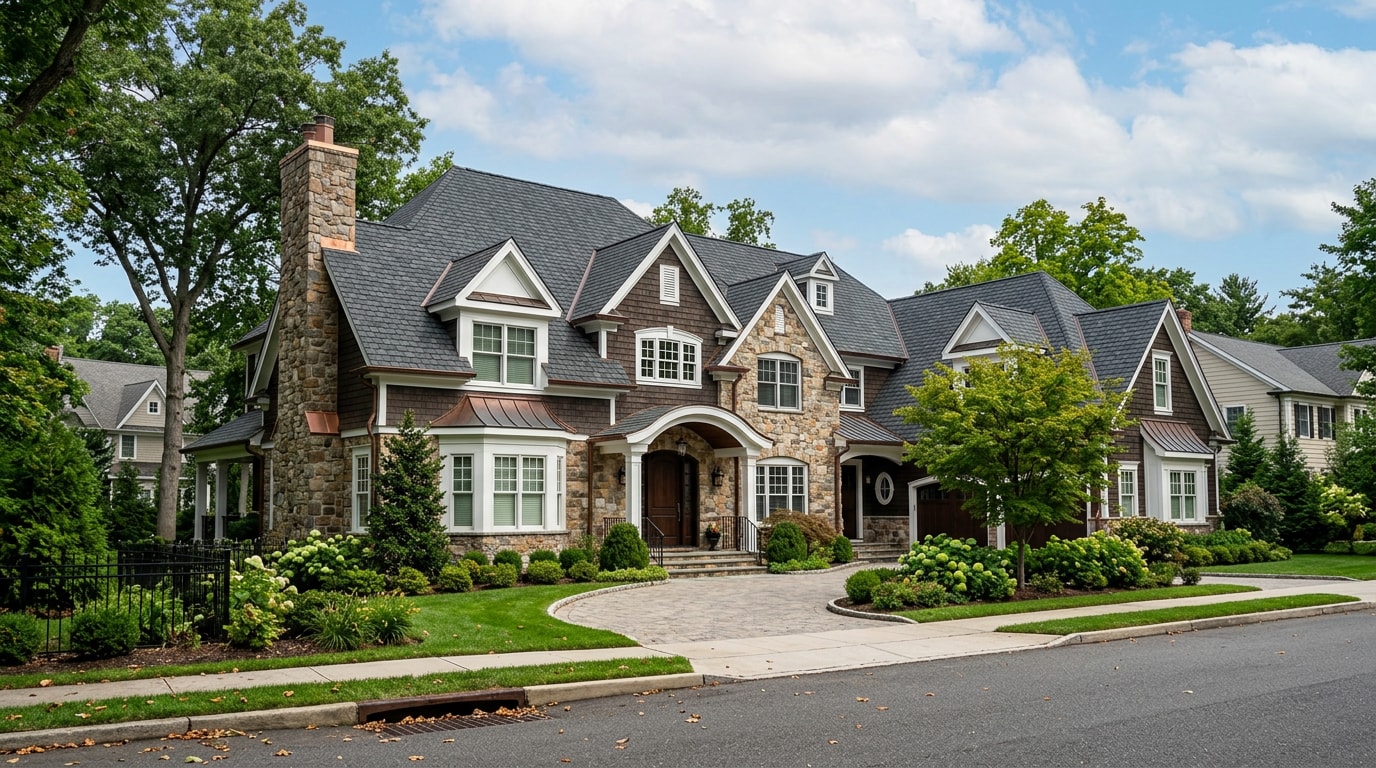
Roof builders in Short Hills, NJ deal with a housing stock that punishes shortcuts. Short Hills has roughly 14,400 residents and a housing stock dominated by large estate homes, which demands roofing contractors who understand both the technical requirements of exceptional properties and the expectations of discerning homeowners. Get a flashing detail wrong on a roofline with four dormers and two chimneys, and a small leak becomes a five-figure repair. Here's what actually matters when you're comparing materials, costs, permits, and contractors before you sign anything.
Signs Your Short Hills Roof Needs Repair or Replacement
Most homeowners wait too long to call. Watch for these five warning signs:
- Age at or past the shingle's rated lifespan
- Active water stains on ceilings or interior walls
- Missing, curling, or granule-bald shingles
- A visibly sagging roof deck or ridge line
- A sudden, unexplained jump in heating or cooling bills
On Short Hills' larger, older estate homes, these signs often surface later than they would on a smaller property simply because there's more roof area for a problem to travel across before it shows up inside. That's exactly why a once-a-year inspection matters more here than in a typical subdivision. Asphalt shingles are generally built to last 20 to 25 years under normal conditions, but ventilation, installation quality, and New Jersey's freeze-thaw winters all push that number up or down.
Why Flashing Fails First on Estate Homes
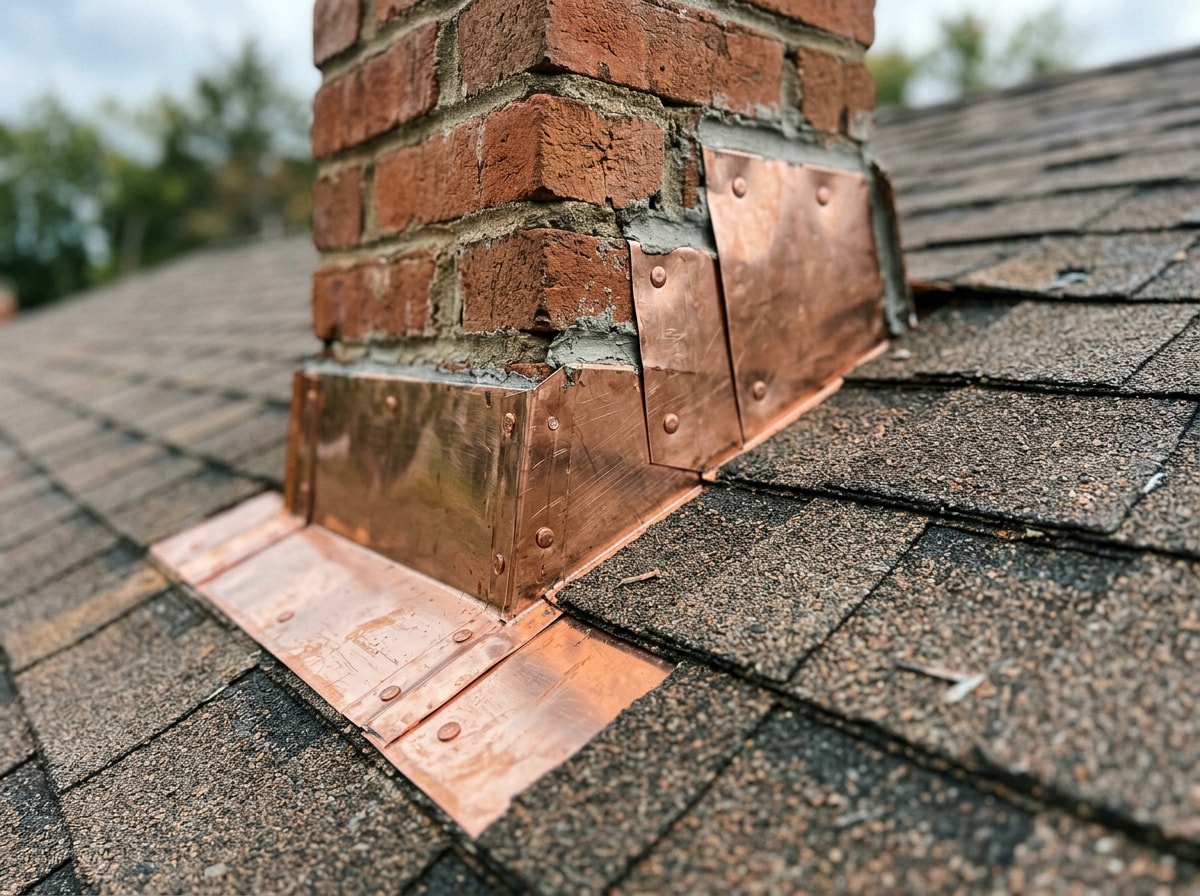
Flashing protects every transition point on a roof: valleys, wall joints, pipe boots, skylights, and chimneys. Larger homes with complex rooflines simply have more of these transition points, which means more potential entry spots for water once a seal corrodes or pulls loose. Chimney flashing and skylight flashing are the two most common repair calls we get on Short Hills' custom and mid-century homes after a hard winter.
Roofing Materials for Short Hills Homes: GAF vs. Owens Corning vs. Solar
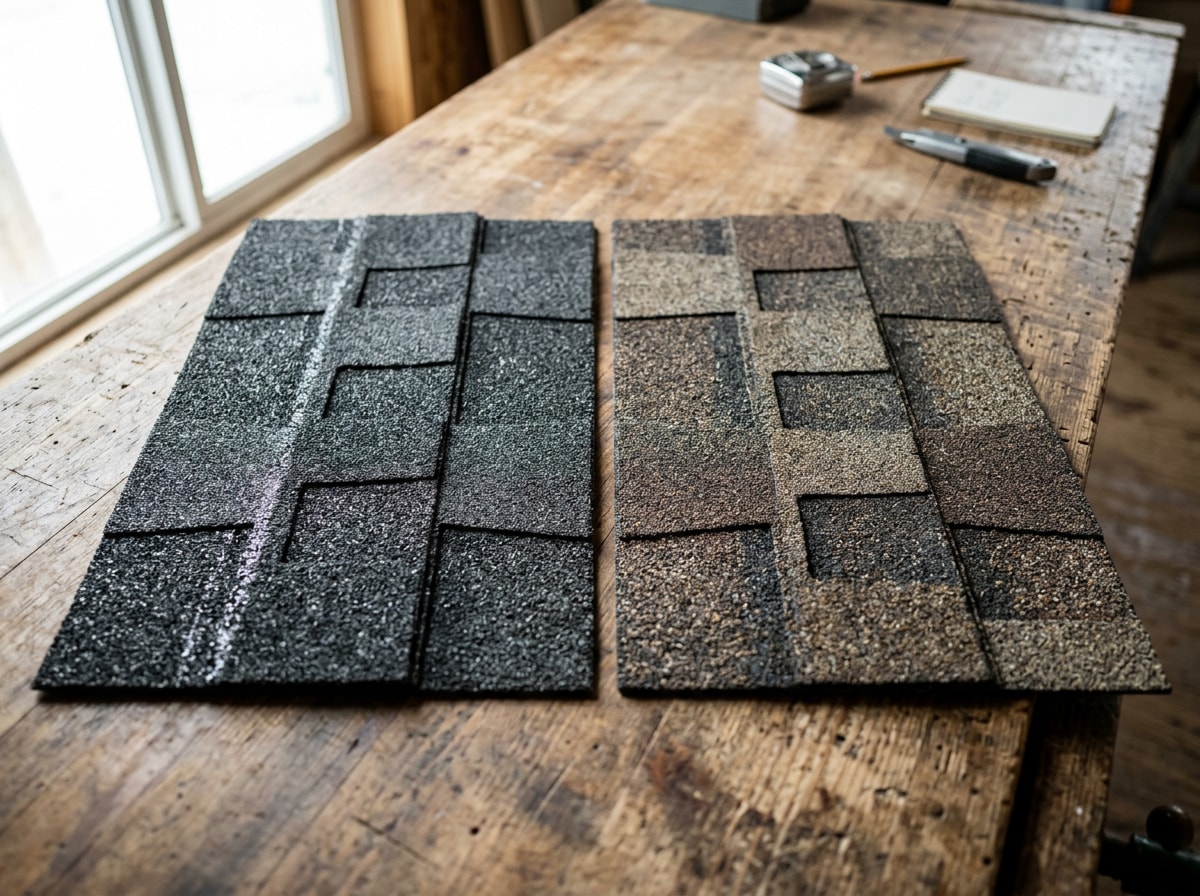
Short Hills homeowners weigh a handful of material options when it's time to replace a roof. The table below compares the two dominant architectural shingle brands.
| Shingle | Wind Rating | Warranty | Installed Cost (national baseline) |
|---|---|---|---|
| GAF Timberline HDZ | 130 mph (ASTM D7158); unlimited with WindProven accessories | Lifetime Limited | $3.00–$3.50 per sq. ft. |
| Owens Corning Duration | 130 mph | Lifetime Limited | Comparable to GAF through certified dealers |
GAF Timberline HDZ and Owens Corning Duration carry matching 130 mph wind ratings and lifetime limited warranties , so the real differentiator for most Short Hills homeowners comes down to color-matching, dealer certification, and crew experience rather than raw material quality. GAF's top-tier wind coverage has a catch worth knowing before you sign a quote: the 15-year WindProven Limited Wind Warranty covers GAF shingles with LayerLock Technology only, and it requires the use of GAF starter strips, roof deck protection, ridge cap shingles, and leak barrier or attic ventilation . Skip one accessory and that upgraded warranty doesn't apply, no matter what the sales sheet implied.
For a typical Short Hills roof measuring 30 to 45 squares, the $3.00 to $3.50 per square foot national baseline pencils out to roughly $9,000 to $19,000 in shingles and labor before accounting for steep pitches, multiple dormers, or the extra chimney flashing work that's routine on estate homes. Add those complexity factors and totals north of $20,000 aren't unusual on the largest properties.
Solar Shingles and Energy-Efficient Roofing
Solar shingles and reflective roofing are increasingly common upgrades for Short Hills homeowners trying to cut utility costs. To carry the ENERGY STAR label, steep-slope roofing products must have an initial solar reflectance greater than or equal to 0.25 , a baseline worth asking any installer to confirm before you pay a premium for an "energy-efficient" shingle line.
Do You Need a Permit to Replace a Roof in New Jersey?
Usually, no. Construction permits are not required for ordinary maintenance, which includes routine repairs , and in 2018 the state's Department of Community Affairs folded standard residential re-roofing into that category. The classification of work as ordinary maintenance is not a waiver from code compliance, but no permit is required and there are no inspections of the work.
That exemption has limits. It covers straightforward shingle replacement on detached one- and two-family homes, not structural changes, new decking after rot damage, or multi-family and commercial properties. Millburn Township can still require documentation in some cases, so confirm with whoever pulls your quote before work starts.
Professional Roof Installation vs. DIY
A licensed general contractor brings code knowledge, fall-protection equipment, and manufacturer-certified installation methods most homeowners can't replicate on a steep, multi-plane roof. Professional installation also protects your material warranty, which manufacturers routinely void over improperly installed flashing or underlayment.
DIY roofing on a Short Hills estate home carries real risk:
- Voided manufacturer warranties from non-certified installation
- Fall hazards on steep or multi-story rooflines
- Costly rework if flashing, underlayment, or ventilation is installed out of spec
- Insurance claim denials if storm damage repairs weren't done to code
For a structure this large and this complex, hiring a licensed contractor almost always costs less over the life of the roof than a DIY attempt that needs to be redone.
Roof Builds for New Construction, Additions & Custom Homes
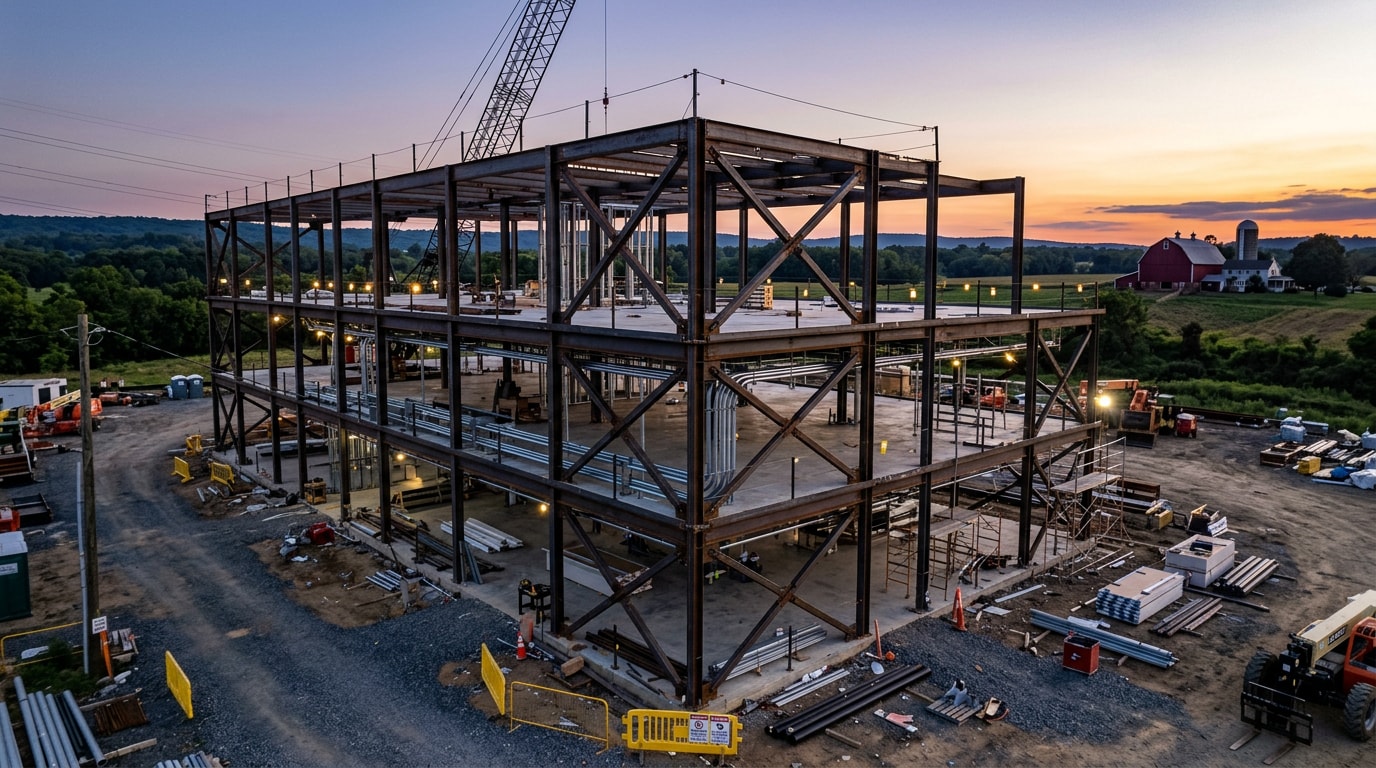
Here's where Short Hills differs from most New Jersey towns: a large share of the roofing work isn't repair at all, it's new construction. Custom homes, teardown rebuilds, and major additions all need a roof built from the framing up, not patched over an existing deck.
That kind of work calls for a general contractor who coordinates roof framing with the rest of the build, not a single-trade roofer working in isolation. At Lion I Construction, our crews handle structural framing and roof builds as part of the same scope we use for exterior remodeling and siding installation, so there's one crew accountable for how the roofline, flashing, and exterior envelope all tie together. On additions in particular, that coordination matters: a roof tie-in done wrong is one of the most common sources of leaks we see on older Short Hills homes, as covered in more depth in our guide to hiring a design-build contractor.
If you're building new or adding on, look for a contractor with:
- Proven code-compliant roof installation experience on new construction, not just re-roofs
- Active licensing and insurance, verifiable on request
- A track record coordinating roof builds with general contracting and structural framing crews
- Familiarity with Millburn Township's permitting and inspection process
Local permitting experience saves real time. A contractor who's filed in Millburn Township before moves faster than one learning the process on your project. Check our Short Hills, NJ service area page to confirm coverage before reaching out, and see the full general contractor category for everything that falls under one roof on a build like this.
Choosing a Roof Builder for a Short Hills Project
Before you sign a contract, get answers to these in writing:
- Is the warranty manufacturer-backed, and does it require certified installation?
- Who pulls the permit, if one is needed, and who's responsible if the township requires one later?
- What's the crew's experience with estate-home rooflines specifically, not just standard re-roofs?
- Is the quote itemized by material, labor, flashing, and disposal, or bundled into one number?
- Does the contractor carry current liability insurance and workers' comp?
A vague answer to any of these is a reason to keep shopping. Request a free estimate and ask these five questions directly. A contractor who answers plainly is usually the one who'll show up and do the work the way they said they would.
FAQ
How much does a new roof cost in Short Hills, NJ?
Expect roughly $9,000 to $19,000 for a standard architectural shingle replacement on a 30 to 45 square roof, based on national installed pricing of $3.00 to $3.50 per square foot. Steep pitches, multiple dormers, and extra chimney flashing common on estate homes can push totals above $20,000. Request a free estimate for a number specific to your property.
Do you need a permit to replace a roof in New Jersey?
Usually not. Standard re-roofing on a detached one- or two-family home is classified as ordinary maintenance under the state's Uniform Construction Code, which means no permit and no inspection in most cases. Structural changes, full deck replacement, or multi-family properties can still require one, so confirm with your contractor first.
How long does a roof replacement take?
Most standard tear-offs take one to three days. Larger Short Hills estate homes with complex rooflines, multiple valleys, or extensive flashing work often take longer because of the added detail work around chimneys and dormers.
What's the best roofing material for a Short Hills home?
GAF Timberline HDZ and Owens Corning Duration both perform well on estate-style homes, with matching 130 mph wind ratings and lifetime limited warranties. New construction and additions are strong candidates for solar shingle integration if energy efficiency is a priority.
Can the same contractor build a new roof and handle my addition or remodel?
Yes, and it's usually a better outcome than hiring separate trades. A general contractor who frames the structure, builds the roof, and finishes the exterior envelope in one scope avoids the tie-in and sequencing errors that happen when multiple unconnected crews hand off work to each other.